
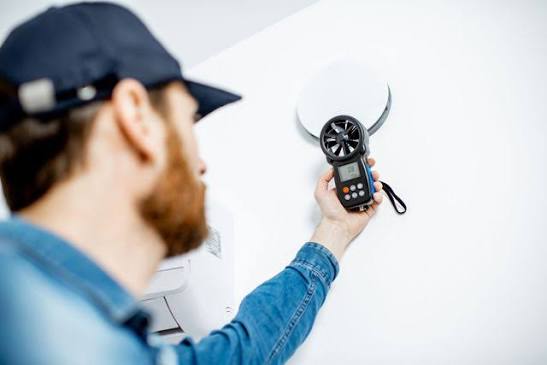
Indoor air quality (IAQ) plays a crucial role in creating healthy, productive, and energy-efficient indoor environments. Whether it’s an office, school, hospital, manufacturing facility, or commercial building, maintaining clean indoor air is essential for occupant well-being and operational efficiency.
Modern buildings are increasingly adopting indoor air quality testing, demand controlled ventilation, and advanced IAQ monitoring system solutions to improve air quality while reducing energy costs. This guide explains how these technologies work together and why every facility should consider implementing them.
What Is Indoor Air Quality (IAQ)?
Indoor Air Quality (IAQ) refers to the condition of the air inside buildings and how it affects the health, comfort, and performance of occupants.
Poor indoor air quality can result from:
- High carbon dioxide (CO₂) levels
- Volatile Organic Compounds (VOCs)
- Fine dust particles (PM2.5 & PM10)
- Mold and mildew
- Excess humidity
- Poor ventilation
- Airborne bacteria and viruses
When indoor air becomes contaminated, occupants may experience:
- Headaches
- Fatigue
- Allergies
- Respiratory problems
- Reduced concentration
- Sick Building Syndrome (SBS)
This is why indoor air quality testing has become an essential part of modern building management.
Why Indoor Air Quality Testing Is Important
Indoor air quality testing helps identify pollutants before they become serious health hazards. Testing provides measurable data that allows building managers to improve ventilation, HVAC performance, and occupant comfort.
Benefits include:
- Healthier work environments
- Better employee productivity
- Reduced sick leave
- Improved HVAC performance
- Compliance with indoor air quality standards
- Lower maintenance costs
Professional indoor air quality testing typically measures:
- Carbon Dioxide (CO₂)
- Carbon Monoxide (CO)
- Temperature
- Relative Humidity
- PM2.5
- PM10
- المركبات العضوية المتطايرة (VOCs)
- الفورمالديهايد (Formaldehyde)
- Airflow
Regular testing ensures that indoor spaces remain safe throughout the year.
Common Sources of Indoor Air Pollution
Indoor pollutants originate from many everyday sources.
These include:
- HVAC systems
- Office furniture
- Cleaning chemicals
- Paints and adhesives
- Building materials
- Carpets
- Printers and copiers
- Cooking areas
- Occupants themselves
Without proper ventilation, these pollutants continue to accumulate indoors.
This makes continuous monitoring even more important.
What Is an IAQ Monitoring System?
An IAQ monitoring system is a smart technology that continuously tracks indoor air conditions using sensors installed throughout a building.
Instead of performing air quality testing only once or twice a year, an IAQ monitoring system provides real-time information about air conditions.
Most systems monitor:
- ثاني أكسيد الكربون (CO₂)
- المركبات العضوية المتطايرة (VOCs)
- Temperature
- Humidity
- PM2.5
- PM10
- Air pressure
- Airflow
The collected data is displayed through dashboards or Building Management Systems (BMS), allowing facility managers to respond immediately whenever air quality declines.
Benefits of an IAQ Monitoring System
Installing an IAQ monitoring system provides several advantages.
Real-Time Monitoring
Receive instant alerts whenever air quality falls below recommended levels.
Improved Occupant Health
Continuous monitoring helps reduce exposure to harmful pollutants.
Energy Savings
The system prevents unnecessary HVAC operation while maintaining optimal air quality.
Data-Driven Decisions
Historical reports help identify long-term air quality trends.
Regulatory Compliance
Many industries require documentation proving healthy indoor environments.
Understanding Demand Controlled Ventilation
One of the biggest innovations in HVAC technology is Demand Controlled Ventilation (DCV).
Traditional ventilation systems operate at fixed airflow rates regardless of occupancy.
Demand Controlled Ventilation adjusts ventilation based on actual indoor conditions.
Instead of constantly bringing in outside air, the system increases or decreases ventilation according to:
- CO₂ levels
- Occupancy
- Air quality
- Room usage
This results in healthier indoor environments while reducing energy consumption.
How Demand Controlled Ventilation Works
A typical Demand Controlled Ventilation system uses CO₂ sensors placed throughout occupied spaces.
The process works like this:
- Sensors measure indoor CO₂ concentration.
- Data is sent to the Building Management System.
- The HVAC system automatically adjusts outdoor air intake.
- Ventilation increases when occupancy rises.
- Ventilation decreases when occupancy falls.
This smart approach ensures fresh air is supplied only when needed.
Benefits of Demand Controlled Ventilation
Implementing Demand Controlled Ventilation offers significant advantages.
Lower Energy Costs
Heating and cooling outdoor air requires substantial energy.
DCV reduces unnecessary ventilation, lowering utility bills.
Better Indoor Comfort
Fresh air levels automatically match occupancy.
Occupants experience improved comfort throughout the day.
Extended HVAC Equipment Life
Reduced system runtime decreases wear and tear on HVAC equipment.
Sustainable Building Operations
DCV helps buildings achieve energy efficiency certifications while lowering carbon emissions.
How Indoor Air Quality Testing, IAQ Monitoring System, and Demand Controlled Ventilation Work Together
These three technologies complement each other perfectly.
Indoor Air Quality Testing
Provides detailed baseline measurements.
↓
IAQ Monitoring System
Continuously monitors air quality in real time.
↓
Demand Controlled Ventilation
Automatically adjusts airflow based on monitoring data.
Together, they create healthier buildings while minimizing energy waste.
Industries That Benefit Most
Many industries rely on these technologies.
Commercial Offices
Maintain employee productivity and wellness.
Schools and Universities
Improve student concentration and reduce illness.
Hospitals
Maintain strict infection control standards.
Manufacturing Facilities
Protect workers from airborne contaminants.
Laboratories
Ensure precise environmental control.
Hotels
Enhance guest comfort and satisfaction.
Retail Buildings
Improve customer experience.
Government Buildings
Support energy efficiency initiatives.
Best Practices for Improving Indoor Air Quality
Organizations should follow these recommendations:
- Schedule regular indoor air quality testing
- Install a smart IAQ monitoring system
- Use Demand Controlled Ventilation
- Replace HVAC filters regularly
- Maintain proper humidity (30–60%)
- Clean air ducts periodically
- Increase outdoor air when needed
- Reduce indoor pollution sources
- Monitor CO₂ continuously
- Perform routine HVAC maintenance
These steps create healthier and more efficient buildings.
Choosing the Right IAQ Solution
When selecting an indoor air quality solution, consider systems that offer:
- Real-time monitoring
- Cloud-based reporting
- Mobile alerts
- CO₂ monitoring
- PM2.5 measurement
- VOC detection
- Easy HVAC integration
- Building Management System compatibility
- Historical data analysis
- Scalable sensor networks
An advanced IAQ monitoring system combined with Demand Controlled Ventilation provides the best long-term investment.
Conclusion
Creating healthier indoor environments is no longer optional—it is essential. With increasing awareness of occupant health and energy efficiency, organizations are investing in indoor air quality testing, advanced IAQ monitoring system technologies, and Demand Controlled Ventilation to maintain safe and comfortable buildings.
Regular indoor air quality testing identifies hidden air quality issues, an IAQ monitoring system provides continuous real-time insights, and Demand Controlled Ventilation optimizes fresh air delivery while reducing energy consumption. Together, these solutions improve occupant health, enhance productivity, extend HVAC equipment life, and support sustainability goals. Investing in these technologies is a proactive step toward creating healthier, smarter, and more energy-efficient buildings.
Frequently Asked Questions (FAQs)
1. What is indoor air quality testing?
Indoor air quality testing is the process of measuring pollutants such as CO₂, VOCs, particulate matter, humidity, and temperature to evaluate the safety and comfort of indoor environments.
2. What is an IAQ monitoring system?
An IAQ monitoring system is a network of sensors that continuously tracks indoor air quality in real time, providing alerts and reports to help maintain healthy indoor conditions.
3. How does Demand Controlled Ventilation improve energy efficiency?
Demand Controlled Ventilation adjusts the amount of fresh air supplied based on occupancy and CO₂ levels, reducing unnecessary HVAC operation and lowering heating and cooling costs.
4. Why should businesses invest in indoor air quality solutions?
Businesses benefit from healthier employees, increased productivity, lower energy costs, improved HVAC performance, regulatory compliance, and a safer indoor environment through indoor air quality testing, IAQ monitoring systems, and Demand Controlled Ventilation.