
+1 (301) 2077-200
+1 (301) 2077-200
Indoor Air Quality (IAQ)
Indoor Air Quality (IAQ) encompasses the chemical, biological, and physical characteristics of indoor air that affect occupant health, comfort, and productivity. Our IAQ services deliver measurable outcomes, not just test reports
Poor indoor air quality can lead to serious health issues, reduced productivity, and building complaints. At Zytona Solutions, we provide professional IAQ assessments, monitoring, and corrective solutions to ensure safe and healthy indoor environments.
IAQ is determined by three categories of indoor air factors: chemical (VOCs, formaldehyde, CO₂), biological (mold, bacteria, allergens), and physical (particulate matter, temperature, humidity). Poor performance in any category directly impacts occupant health, cognitive function, and regulatory compliance.
Indoor air can be 2–5 more polluted than outdoor air. For building owners and employers, poor IAQ translates to increased absenteeism, reduced cognitive performance, regulatory risk, and liability exposure.
Productivity gain from good IAQ
Reduction in sick days
ASHRAE 62.1 aligned
Comprehensive evaluation of chemical, biological, and physical air quality factors against international standards.
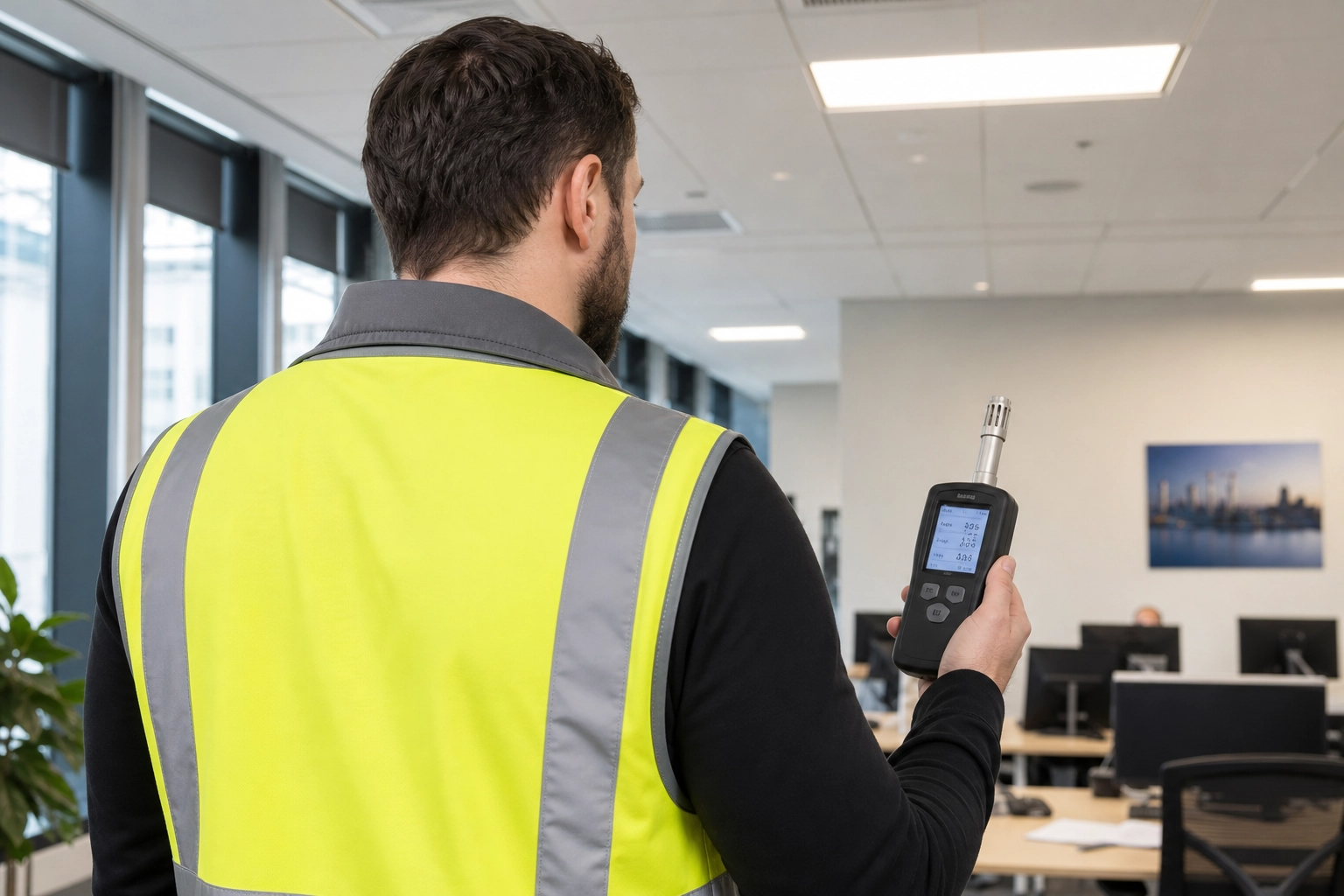
Deployment of calibrated sensors measuring PM2.5, PM10, CO₂, VOCs, formaldehyde, temperature, and humidity.
Air sampling, surface testing, moisture mapping, and post-remediation verification for biological contaminants.
Systematic identification and resolution of odor sources including chemical off-gassing, microbial growth, and ventilation deficiencies.
Assessment of ventilation systems, filtration efficiency, ductwork conditions, and air distribution effectiveness.
Laboratory-grade air sampling for particulates, gases, biologicals, and volatile compounds with certified analysis.
Detailed reports with prioritized remediation strategies, compliance status, and estimated ROI for each improvement.
Fine and coarse particulate matter from construction, traffic, and HVAC systems that penetrate deep into the respiratory system.
Elevated carbon dioxide levels indicate inadequate ventilation and correlate directly with reduced cognitive function.
Volatile organic compounds emitted from paints, adhesives, furnishings, and cleaning products — a leading cause of sick building syndrome.
A common off-gassing pollutant from composite wood products, insulation, and textiles with known carcinogenic properties.
Mold spores, bacteria, and other microbial contaminants that thrive in moisture-prone environments and degrade occupant health.
The foundational standard defining minimum ventilation rates and IAQ requirements for commercial and institutional buildings.
Defines acceptable thermal comfort parameters including temperature, humidity, air speed, and radiant temperature.
EPA frameworks for IAQ assessment, pollutant identification, and remediation strategies in commercial environments.
Global guidelines for indoor air pollutant concentrations including PM2.5, NO₂, and formaldehyde exposure limits.
LEED Indoor Environmental Quality credits for ventilation, IAQ testing, low-emitting materials, and thermal comfort verification.
All IAQ assessments are conducted by certified environmental professionals holding credentials from the International Society of Indoor Air Quality and Climate (ISIAQ) and U.S. Green Building Council (USGBC).

LEED’s Indoor Environmental Quality (EQ) category rewards buildings that deliver superior air quality, thermal comfort, and occupant well-being. Our IAQ services directly support multiple EQ credits, from minimum IAQ performance prerequisites to enhanced ventilation and post-construction testing
ASHRAE 62.1 ventilation rate verification
Enhanced ventilation design & monitoring
VOC & formaldehyde testing verification
Pre- and post-occupancy air quality testing
ASHRAE 55 compliance verification
A structured four-phase process that delivers clear, prioritized, and actionable IAQ improvement strategies
1
Comprehensive walk-through of HVAC systems, building envelope, pollutant sources, and ventilation pathways to identify risk factors.
2
Deployment of calibrated sensors measuring PM2.5, PM10, CO₂, VOCs, formaldehyde, temperature, and humidity over representative periods.
3
Data analysis against ASHRAE 62.1, ASHRAE 55, and EPA benchmarks, identifying exceedances, trends, and root causes.
4
Actionable report with prioritized recommendations, compliance status, remediation strategies, and estimated ROI for each improvement.
Comprehensive indoor air quality assessments measuring CO₂, PM2.5, VOCs, humidity, and temperature against ASHRAE 62.1 and EPA guidelines. We establish baselines that inform every subsequent action.
Design and deploy permanent IAQ monitoring systems that provide real-time visibility into building air quality. Automated alerts ensure immediate response to any deviation from healthy parameters.
Verify that your ventilation systems deliver fresh air where it's needed. We test supply, return, and exhaust rates to ensure occupant zones receive adequate outdoor air per ASHRAE 62.1.
Identify and remediate biological contaminants that threaten occupant health and building integrity. Our assessments include air sampling, surface testing, and moisture mapping.
Let’s discuss how our IAQ services can create healthier, more productive spaces.